
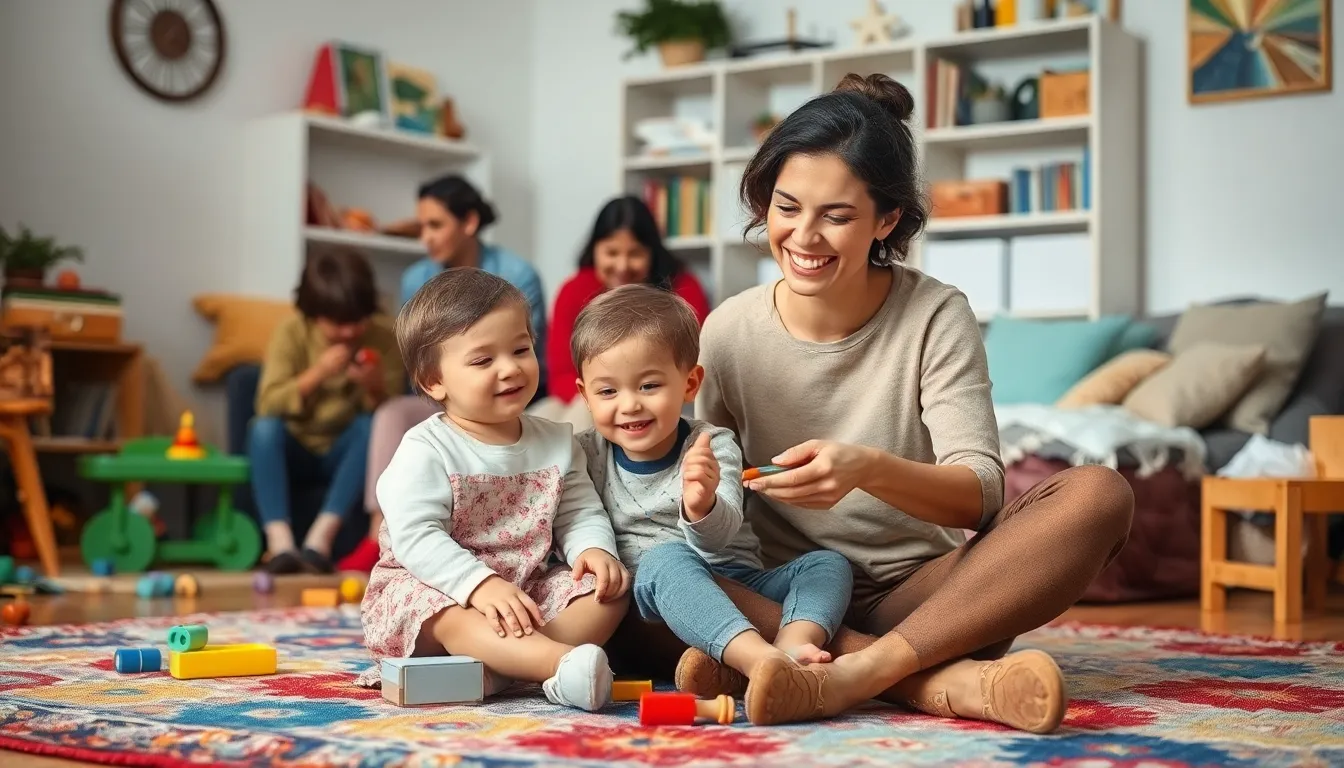
Navigating the wild world of parenting can feel like trying to assemble a piece of IKEA furniture without the instructions—confusing and often hilarious. Every parent knows that there’s no one-size-fits-all approach, and what works for one family might send another into a tailspin. From gentle parenting to strict discipline, the choices can be overwhelming.
Overview of Parenting Approaches
Parenting approaches vary significantly, impacting children’s development and behavior. Researchers categorize these methods into four primary styles: authoritative, authoritarian, permissive, and uninvolved. Each approach affects parent-child interactions and outcomes differently.
Authoritative parenting combines responsiveness and demandingness. This style encourages open communication, setting clear expectations, and maintaining a supportive environment. Studies show children raised with this approach often exhibit higher self-esteem and better social skills.
Authoritarian parenting emphasizes strict rules and obedience. Parents adopting this style enforce high demands with low responsiveness. While children may excel academically, they often struggle with social competence and self-regulation.
Permissive parenting allows significant freedom, with few demands placed on children. These parents tend to be nurturing yet avoid setting boundaries. As a result, children may become impulsive and encounter difficulties in areas requiring self-discipline.
Uninvolved parenting demonstrates minimal interaction or emotional support. These parents often provide basic needs but remain detached. Research indicates children raised in this environment frequently face challenges with emotional stability and academic performance.
Cultural influences also shape parenting approaches. Variations between individualistic and collectivist societies result in different values and expectations. Parenting styles may adjust based on socioeconomic factors and family structures, further complicating the landscape of effective parenting.
Understanding these approaches aids parents in selecting strategies that align with their values and children’s needs. Exploring the strengths and weaknesses of each style fosters informed choices, ultimately leading to healthier family dynamics.
Types of Parenting Approaches

Parenting approaches play a crucial role in children’s development. They can significantly influence a child’s self-esteem, behavior, and social skills.
Authoritative Parenting
Authoritative parenting combines warmth with structure. Parents maintain high expectations while providing support and guidance. Children raised in this environment often exhibit higher self-esteem. They demonstrate better social skills and are more adept at making decisions. Research indicates that authoritative parents encourage independence while still setting clear boundaries. They foster an atmosphere where open communication thrives. This style creates a nurturing environment conducive to healthy child development.
Authoritarian Parenting
Authoritarian parenting emphasizes strict discipline and obedience. Parents impose rigid rules without room for flexibility. Compliance is prioritized over independence, which can lead to academic success. However, children may struggle with social skills and self-expression. This approach often creates a fear-based relationship, as children might worry about disappointing their parents. Research shows that while authoritarian parents expect high achievement, the lack of emotional support can hinder overall growth in children.
Permissive Parenting
Permissive parenting is marked by its leniency and high levels of affection. Parents in this category offer significant freedom but impose few limits. Children enjoy many choices, allowing them to explore their interests. However, this lack of structure may lead to impulsiveness and challenges with authority. Experts suggest that permissive parenting can result in difficulties regulating emotions in children. While they often have strong relationships with their parents, guidance and consistent expectations remain essential for their development.
Uninvolved Parenting
Uninvolved parenting features minimal engagement and emotional support from parents. This approach often results in a lack of supervision and emotional connection. Children may experience emotional challenges and difficulties in academic settings. Besides, they often lack strong social skills due to this detachment. Studies reveal that uninvolved parenting can lead to low self-esteem and behavioral problems. The absence of parental involvement significantly impacts child’s well-being and development across various areas.
Factors Influencing Parenting Approaches
Various elements significantly impact the way parents approach raising their children. Understanding these factors can lead to more informed parenting decisions.
Cultural Considerations
Cultural backgrounds shape parenting styles and expectations. Different cultures emphasize distinct values, such as community involvement or individual achievement. In collectivist cultures, parents often prioritize family harmony and cooperation, affecting how children view themselves. On the other hand, individualistic cultures may encourage independence and self-expression, influencing children’s personal development. Ultimately, these cultural nuances determine how discipline, affection, and communication styles vary across families.
Socioeconomic Status
Socioeconomic status plays a crucial role in parenting approaches. Families with higher income levels often access better educational resources, healthcare, and extracurricular activities. These factors can enhance children’s development and open opportunities. Conversely, lower-income families may face challenges that impact parenting practices, such as stress from financial instability. These economic pressures can lead to less engagement, affecting children’s emotional and social well-being. Thus, socioeconomic conditions shape the overall environment in which parenting occurs.
Educational Background
Educational backgrounds of parents also influence their parenting styles. Parents with higher education levels often employ more informed and research-based methods. They may emphasize critical thinking and encourage open discussions with their children. Parents with limited education might rely on traditional or intuitive approaches rooted in their upbringing. This variation impacts not only the learning environment at home but also children’s overall attitudes towards education and learning. Engaging with diverse educational philosophies can dramatically affect a child’s development trajectory.
Evaluating Parenting Approaches
Evaluating parenting approaches involves understanding the nuances of each style and the unique benefits and challenges they present.
Benefits of Each Approach
Authoritative parenting fosters high self-esteem and strong social skills in children. This style creates a balance between guidance and independence, promoting healthy decision-making. Children from authoritative backgrounds often feel secure and valued, which enhances their emotional development. In contrast, permissive parenting allows for greater exploration and creativity, encouraging children to pursue their interests. They may develop close relationships with parents who adopt this style, leading to open lines of communication. Additionally, authoritarian parenting can instill discipline and a sense of responsibility, often resulting in academic success due to its structured environment.
Challenges Faced by Parents
Effective parenting comes with numerous challenges. Authoritative parents may struggle to maintain consistent boundaries while fostering independence. Conflicts can arise when children test limits, creating stress within the household. Permissive parents often face difficulties with setting limits, which can lead to impulsive behavior in children. This lack of structure may challenge the child’s ability to navigate societal expectations. Authoritarian parenting sometimes creates rigidity, leading children to feel fear or resentment, hindering their emotional expression. Uninvolved parents face significant obstacles in building emotional connections, possibly resulting in long-term emotional and behavioral issues for their children.
Navigating the journey of parenting is a unique experience for each family. The variety of approaches available allows parents to tailor their methods to fit their children’s individual needs. Understanding the strengths and challenges of different parenting styles can empower parents to create a nurturing environment that fosters growth and development.
Cultural and socioeconomic factors further influence these choices, highlighting the importance of context in parenting. By considering these elements and remaining adaptable, parents can cultivate meaningful relationships with their children. Ultimately, the goal is to raise well-rounded individuals who thrive emotionally and socially.