

When it comes to chemistry, understanding the polarity of molecules can feel like deciphering a secret code. Take nitrogen trichloride (NCl3), for instance. Is it a lone wolf in the nonpolar world or does it prefer the company of polar pals? This seemingly simple question can lead to some surprising revelations about its behavior and interactions.
Understanding NCL3
Nitrogen trichloride, or NCl3, consists of one nitrogen atom and three chlorine atoms. The molecular structure features a trigonal pyramidal geometry due to the presence of a lone pair on the nitrogen atom. This arrangement significantly impacts the molecule’s electronegativity and overall polarity.
Chlorine, being more electronegative than nitrogen, attracts shared electron pairs more strongly. Consequently, this unequal sharing of electrons results in polar covalent bonds. Additionally, the asymmetrical shape of NCl3 contributes to a net dipole moment, leading to distinct polar characteristics.
In polar molecules, positive and negative ends exist, creating regions with differing charges. NCl3’s polar nature allows it to engage in dipole-dipole interactions. These interactions play a crucial role in determining solubility and reactivity in various solvents.
Examining NCl3 in terms of intermolecular forces shows that the presence of polar covalent bonds enhances its interaction with polar compounds. The molecule’s polarity affects its boiling point and melting point, making it distinct from nonpolar molecules such as methane.
Polar molecules like NCl3 may dissolve readily in polar solvents, while nonpolar solvents may struggle with solubility. Understanding this behavior is essential in applications ranging from industrial processes to laboratory settings. Analyzing nitrogen trichloride provides insights into molecular interactions influenced by polarity. The study of NCl3 illustrates fundamental principles in chemistry relevant to the behavior of similar molecules.
Molecular Structure of NCL3
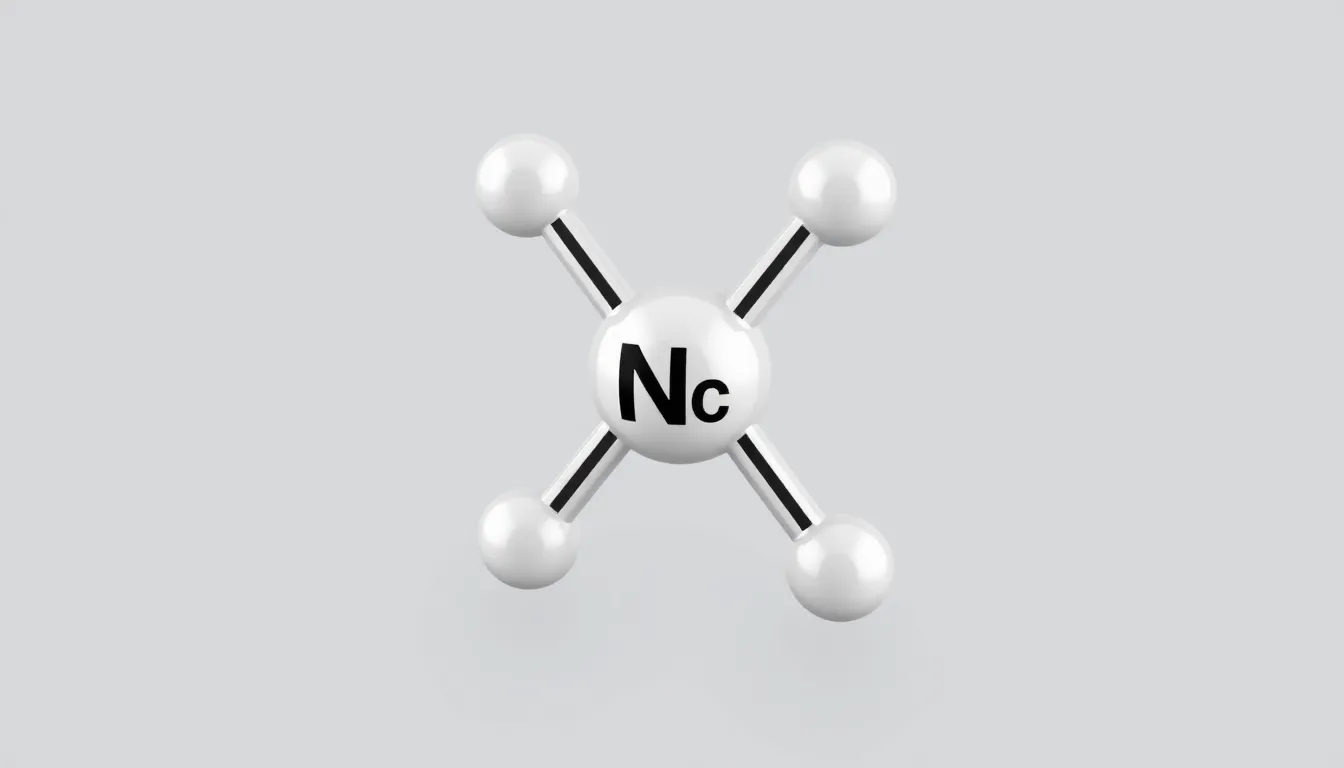
Nitrogen trichloride (NCl3) has a unique molecular structure that greatly influences its polarity. The molecule consists of one nitrogen atom bonded to three chlorine atoms, forming a trigonal pyramidal shape due to a lone pair of electrons on the nitrogen. This geometry creates an asymmetrical distribution of charge, which plays a crucial role in determining the overall polarity of NCl3.
Geometry of NCl3
In NCl3, the central nitrogen atom is surrounded by three chlorine atoms, leading to a trigonal pyramidal configuration. With a lone pair on nitrogen, the geometry deviates from a flat plane, resulting in a three-dimensional shape. This shape contributes to the uneven distribution of electrons across the molecule. The spatial arrangement enables NCl3 to exhibit polar characteristics, affecting its interactions with other molecules.
Bond Angles and Dipole Moments
The bond angles in NCl3 measure approximately 107 degrees. These angles arise from the repulsion between the lone pair and bond pairs, pushing the chlorine atoms closer together. Each nitrogen-chlorine bond is polar due to chlorine’s higher electronegativity, creating dipole moments that do not cancel out. Consequently, the net dipole moment aligns with the lone pair’s direction, confirming NCl3’s polar nature and enhancing its reactivity in various chemical environments.
Polarity Explained
Understanding polarity is crucial in chemistry, especially for molecules like nitrogen trichloride (NCl3). Polarity refers to the distribution of electrical charge over the atoms in a molecule.
Definition of Polar and Nonpolar Molecules
Polar molecules exhibit an uneven distribution of charge, resulting in distinct positive and negative ends or poles. This characteristic often arises from differences in electronegativity, where one atom attracts shared electrons more strongly. Nonpolar molecules, conversely, feature a balanced charge distribution with no significant poles. In these cases, electronegativity differences are either negligible or symmetrically arranged. A clear example of a polar molecule is NCl3, where nitrogen’s lower electronegativity impacts bond formation with chlorine.
Factors Influencing Polarity
Several factors influence molecular polarity, starting with electronegativity differences. When two connected atoms possess significant differences in electronegativity, the resulting bond becomes polar. Molecular shape also plays an essential role; asymmetric shapes often lead to non-canceling dipole moments, further supporting polarity. The presence of lone pairs on central atoms can distort geometries, creating charge imbalances. For instance, NCl3’s trigonal pyramidal structure arises from these lone pairs, establishing its polar nature. Each of these factors combined shapes the overall polarity and behavior of molecules like NCl3 in chemical reactions.
Is NCL3 Polar or Nonpolar?
NCl3, or nitrogen trichloride, exhibits clear polar characteristics due to its molecular structure and electronegativity differences.
Analysis of NCL3’s Polarity
NCl3 features a trigonal pyramidal geometry that arises from a lone pair on the nitrogen atom. This geometry causes an uneven distribution of charge within the molecule. Each nitrogen-chlorine bond features a dipole moment; chlorine’s higher electronegativity attracts shared electrons more strongly, leading to polar covalent bonds. As a result, the dipole moments add up instead of cancelling out, creating a net dipole moment. This arrangement confirms NCl3’s classification as a polar molecule, affecting its interactions in various solvents.
Comparisons with Other Molecules
Compared to nonpolar molecules like methane, NCl3 shows significant differences in behavior. Methane’s symmetrical tetrahedral shape leads to balanced charge distribution, resulting in no dipole moment. Other polar molecules, such as water, also demonstrate uneven charge distribution, with distinct positive and negative ends. The polar characteristics of NCl3 allow it to engage in dipole-dipole interactions, unlike nonpolar substances, which rely on dispersion forces. In reactions and solubility, this distinction plays a crucial role in predicting molecular behavior.
Nitrogen trichloride is a polar molecule due to its unique trigonal pyramidal structure and the presence of a lone pair on the nitrogen atom. This geometry results in an uneven charge distribution, creating a net dipole moment that distinguishes NCl3 from nonpolar substances. The polar characteristics of NCl3 influence its interactions and solubility in various solvents, making it essential for understanding its behavior in chemical reactions. Recognizing the polarity of molecules like NCl3 is crucial for applications in both industrial processes and laboratory settings, highlighting the significance of molecular geometry and electronegativity in determining polarity.

