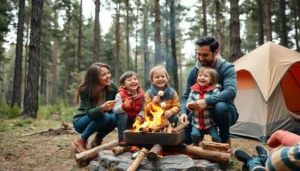

Imagine trading in your couch for a cozy campfire under a blanket of stars. Outdoor camping isn’t just a chance to escape the daily grind; it’s an adventure waiting to unfold. Whether you’re a seasoned outdoorsman or someone who thinks “roughing it” means a hotel without room service, there’s something magical about pitching a tent and roasting marshmallows in the great outdoors.
Table of Contents
ToggleOverview of Outdoor Camp
Outdoor camping provides an immersive experience that reconnects individuals with nature. Campers often set up tents in scenic locations, allowing them to enjoy fresh air and breathtaking views. This activity encourages participants to explore various recreational options, including hiking, fishing, and birdwatching.
Camping fosters community and relationships, as friends and families bond during shared activities. Creating campfires for storytelling and meal preparation strengthens these connections while offering warmth under the stars. Participants often engage in cooking outdoors, learning new recipes, and sharing meals that enhance their experience.
Safety remains a priority for outdoor campers. Understanding the environment and preparing for possible challenges ensures a more enjoyable adventure. It’s essential to pack appropriate gear, including tents, sleeping bags, and cooking supplies, while also considering weather conditions.
Preparation extends to necessary skills and knowledge. Campers benefit from learning about campsite selection, fire safety, and wildlife awareness before embarking on their journey. Such knowledge minimizes risks and maximizes enjoyment.
Attracting both novice and experienced adventurers, outdoor camping offers a versatile experience. Each location presents unique challenges and opportunities, making every trip different. Forests, mountains, and beaches cater to varying preferences, allowing individuals to choose their preferred camping style.
Overall, outdoor camping presents an opportunity for personal growth, adventure, and relaxation. The ability to disconnect from technology and embrace the simplicity of nature tends to rejuvenate participants, enhancing their overall well-being.
Benefits of Outdoor Camp
Outdoor camping offers numerous advantages for overall well-being. Engaging with nature fosters various health benefits that positively impact both body and mind.
Physical Health Benefits
Physical activity forms a core aspect of outdoor camping. Hiking, swimming, and climbing boost cardiovascular health and enhance muscle strength. Exposure to fresh air promotes better lung function and increases stamina. Natural sunlight provides essential Vitamin D, vital for bone health. Socializing during group activities encourages regular exercise, leading to weight management and improved physical fitness. Outdoor camping facilitates a break from sedentary lifestyles, promoting an active lifestyle among participants.
Mental Health Benefits
Mental well-being benefits significantly from outdoor camping experiences. Nature immersion reduces stress levels, enhancing mood and emotional health. Engaging in outdoor activities can increase feelings of happiness and contentment. Campfire storytelling fosters connections, improving social interaction and reducing feelings of loneliness. Disconnecting from technology allows for mindfulness and reflection, promoting mental clarity. Opportunities for personal growth and exploring new environments further enhance confidence and resilience. Embracing nature effectively rejuvenates the mind, creating a sense of peace and balance.
Types of Outdoor Camps
Outdoor camps come in various forms, catering to different interests and age groups. Each type offers unique experiences and activities for participants.
Day Camps
Day camps provide structured activities, keeping campers engaged during daily hours. Children often experience nature through hands-on activities, such as hiking and crafts. Social interaction is another highlight, fostering friendships among peers. Programs include outdoor games, team-building exercises, and nature exploration, creating a fun and educational environment.
Overnight Camps
Overnight camps immerse participants in multi-day experiences, allowing them to stay under the stars. Campers engage in a variety of activities, such as swimming, hiking, and campfire storytelling. These camps often promote independence, encouraging young individuals to connect with nature and build lifelong skills. Shared experiences foster strong bonds among campers, creating memories that last a lifetime.
Specialty Camps
Specialty camps focus on specific interests or skills, catering to diverse passions. Options may include sports, arts, or technology, providing expert instruction and resources. Campers develop their abilities while enjoying the outdoors in a supportive atmosphere. Attendance at these camps encourages personal growth and exploration, allowing participants to discover new talents or enhance existing ones.
Popular Outdoor Camp Activities
Outdoor camps feature a variety of engaging activities that enhance the overall experience and foster connections among participants.
Hiking and Nature Walks
Hiking and nature walks offer a chance to explore scenic landscapes and immerse in the beauty of the wilderness. Campers benefit from fresh air while discovering local flora and fauna. Guided trails help navigate terrains, ensuring safety and enjoyment. Groups often embark on hikes of varying difficulty levels, catering to all skill sets. While on the trail, participants often bond over shared discoveries, enhancing friendships. Wildlife spotting adds excitement, giving hikers a memorable experience they can share.
Campfire Cooking
Campfire cooking turns mealtime into an adventure. Campers learn various cooking techniques over an open flame, creating delicious meals together. Popular dishes include roasted marshmallows and foil packet meals that incorporate fresh ingredients. Campfire storytelling enhances the ambiance, providing entertainment while waiting for food. Participants often take turns preparing and serving dishes, which encourages teamwork and camaraderie. Such experiences create lasting memories and deepen connections among campers.
Team-Building Exercises
Team-building exercises promote cooperation and leadership skills. Many outdoor camps incorporate challenges like trust falls and obstacle courses designed to strengthen group dynamics. Engaging activities encourage open communication and help establish trust among participants. Camps often adapt exercises to suit different age groups and abilities, ensuring inclusivity. Participants discover strengths and weaknesses while navigating tasks together. This collective experience fosters friendships that extend beyond the camp environment.
Conclusion
Outdoor camping offers a unique escape from daily life and a chance to reconnect with nature. It fosters personal growth and enhances well-being through physical activities and meaningful interactions. The diverse range of camping experiences ensures there’s something for everyone, whether it’s a day camp for kids or a multi-day adventure for families.
Engaging in outdoor activities not only strengthens bonds among participants but also creates cherished memories. Embracing the simplicity of nature leads to a healthier lifestyle and a renewed sense of peace. With the right preparation and mindset, outdoor camping can be a transformative experience that enriches lives and nurtures the spirit.