

When it comes to feeding little ones, the world of baby-led weaning (BLW) opens up a whole new menu of exciting possibilities. Forget the spoon-fed mush; it’s time for babies to explore flavors and textures on their own terms. Picture this: tiny hands grasping colorful veggies, giggles erupting over a messy mealtime, and parents feeling like culinary wizards. Who knew feeding a baby could be such a delightful adventure?
Understanding BLW Starter Foods
BLW starter foods introduce infants to an array of flavors and textures, promoting independence during meal times. This approach empowers babies to self-feed, making mealtimes enjoyable and interactive.
What Is BLW (Baby-Led Weaning)?
BLW entails allowing infants to choose and eat their food, focusing on whole, unprocessed foods. This method encourages babies to explore foods at their own pace, enhancing their motor skills and coordination. Infants typically start BLW around six months of age, coinciding with their developmental readiness for solid foods. Rather than purees, parents offer suitable finger foods that babies can grasp. Foods rich in nutrients, like fruits, vegetables, and proteins, form the foundation of this weaning technique.
Benefits of BLW Starter Foods
BLW starter foods enable babies to experience diverse tastes and textures from the outset. Exposure to various flavors fosters acceptance of different foods later on, potentially reducing picky eating habits. This method also promotes the development of fine motor skills as babies learn to grasp, chew, and swallow. Encouragement of self-regulation occurs as infants learn to listen to their hunger cues, making meals less stressful. Nutrition plays a vital role; whole foods provide essential vitamins and minerals, supporting healthy growth and development.
Types of BLW Starter Foods
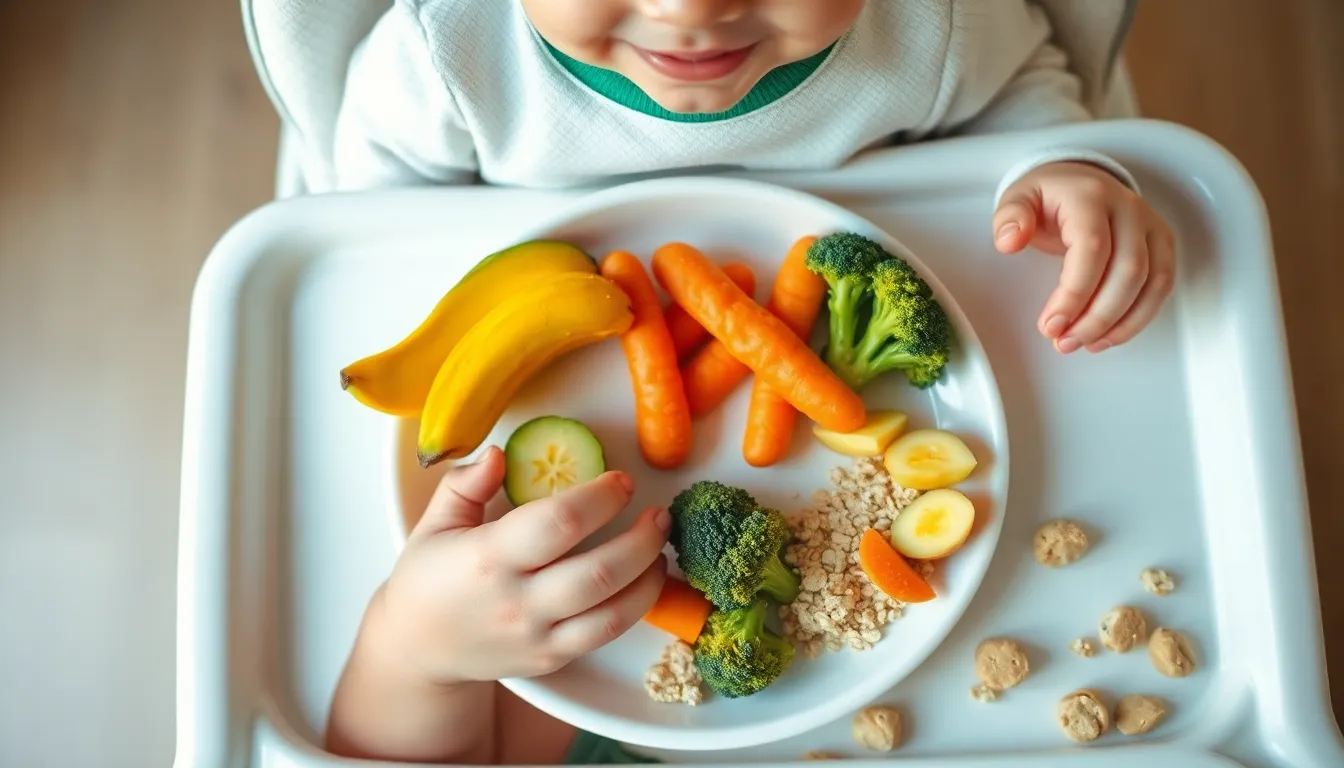
Babies can explore a variety of foods through baby-led weaning (BLW). Starter foods typically include nutrient-dense options, which promote healthy growth.
Fruits and Vegetables
Fruits and vegetables serve as excellent starter foods. Soft, ripe fruits like bananas and avocados are easy for babies to grasp. Steam carrots and broccoli until tender to ensure they’re suitable for young eaters. These foods introduce diverse flavors and textures, encouraging infants to enjoy healthy options. Cut foods into manageable sizes for safe exploration and promote self-feeding skills. Finger-sized pieces support motor skill development, making mealtime both fun and engaging.
Grains and Cereals
Grains and cereals contribute essential energy. Cooked oatmeal or quinoa works well as a finger food option. Tiny pieces of whole grain bread can also be offered, allowing babies to experiment with different textures. Additionally, avoid adding sweeteners or salt to maintain nutritional integrity. Selecting whole grains promotes fiber intake, improving digestive health. Parents can provide various cooked grain options to keep meals interesting and encourage a love for wholesome foods.
Proteins and Dairy
Proteins and dairy enhance growth and development in infants. Options like shredded chicken, soft tofu, or well-cooked beans are nutritious choices. Cheese provides a good source of calcium and protein; it should be offered in small, manageable pieces. Introducing diverse protein sources helps babies acclimate to multiple flavors while supporting muscle development. Avoiding high-sodium processed foods ensures healthy eating habits from the start, allowing babies to become more comfortable with various tastes.
Tips for Introducing BLW Starter Foods
Introducing baby-led weaning starter foods involves some important tips for ensuring a safe and enjoyable experience. Parents prioritize selecting appropriate foods that suit their infants’ developmental stages, focusing on taste, texture, and safety.
Safety Considerations
Safety remains a top priority when introducing BLW starter foods. Always supervise infants during mealtime to prevent choking hazards. Choosing soft foods helps; ripe fruits like bananas and well-cooked vegetables pose less risk. Cut foods into manageable sizes to promote safe self-feeding, keeping pieces large enough for grasping but small enough to reduce choking risks. Using a highchair with proper support enhances stability. Always consult a pediatrician if unsure about introducing certain foods or if there are allergies in the family history.
Encouraging Self-Feeding
Encouraging self-feeding fosters independence and confidence in infants. Offer a variety of colorful and textured foods. Engaging visuals attract infants, motivating them to explore their meals. By allowing them to experiment, infants learn to grasp different shapes and sizes. Avoid pressuring infants to eat; instead, let them choose what they want. Making mealtime interactive enhances the experience. Playfulness during meals invites exploration, making the process enjoyable.
Common Mistakes to Avoid
Avoiding common pitfalls during baby-led weaning ensures a smoother experience. Some mistakes can hinder a baby’s progress and enjoyment at mealtime.
Overly Processed Foods
Overly processed foods pose risks during the introduction of BLW starter foods. These items often contain added sugars, preservatives, and unhealthy fats, which can detract from the nutritious goal. Whole foods should remain the focus. Offering fresh fruits and vegetables enhances flavor and nutritional value. Variety in food selection counters monotony, keeping infants engaged during meals. Healthier alternatives like steamed carrots or ripe avocados facilitate self-feeding and skill development. Parents should limit ingredients that hinder a baby’s acceptance of natural flavors.
Forcing the Child to Eat
Forcing a child to eat can disrupt their natural hunger cues. Instead of encouraging exploration, pressure breeds resistance and anxiety during meals. It’s crucial to empower infants to dictate their appetite. Allowing babies to eat at their own pace fosters independence and confidence. Parents should create an inviting environment filled with colorful, textured foods. This strategy not only promotes self-regulation but also ignites curiosity about different flavors. Encouragement should replace coercion, as such an approach helps nurture a positive relationship with food.
Embracing baby-led weaning opens up a world of flavors and textures for infants while promoting independence at mealtime. By introducing nutrient-dense starter foods, parents can encourage their babies to develop essential motor skills and a healthy relationship with food. The focus on whole, unprocessed options not only supports growth but also fosters a diverse palate that may help reduce picky eating in the future.
Creating a safe and engaging mealtime environment allows infants to explore and enjoy their food journey. With the right approach and a variety of colorful foods, parents can make mealtime a joyful and interactive experience that lays the foundation for lifelong healthy eating habits.